
Tuotetiedot
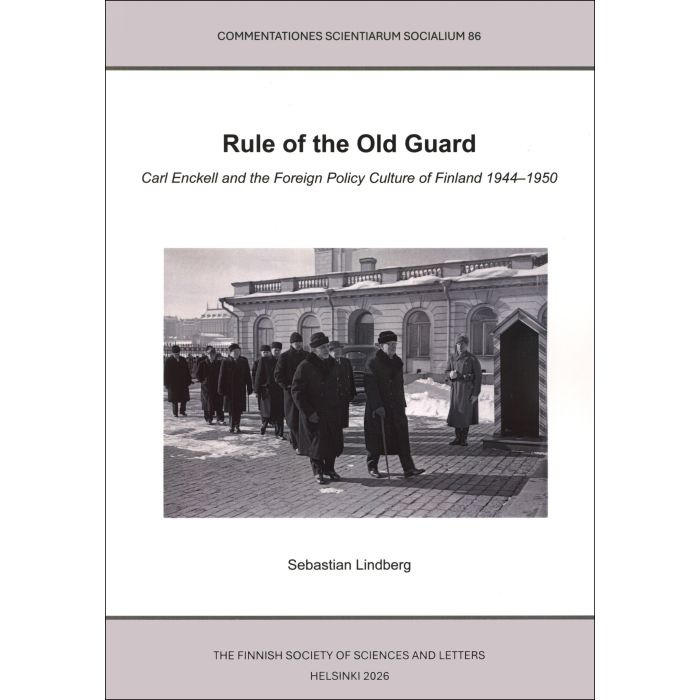
By what compass did Finland navigate the first uncertain years after the Second World War? This study offers a fresh perspective on one of the most closely examined periods in Finnish political history by placing Foreign Minister Carl Enckell, who helmed the Foreign Ministry from 1944 to 1950, at the centre of the analysis. Challenging the conventional view that the armistice signed between Finland and the Soviet Union in 1944 marked a decisive rupture in Finnish foreign policy, the book argues that the early Cold War was instead characterised by remarkable continuity. Drawing on concepts by Karl Mannheim and Reinhart Koselleck the study reveals how generational experiences, collectively held horizons of expectations, and deeply rooted belief systems shaped foreign-policy decisionmaking in postwar Finland. Through a rich biographical examination of Enckell and the postwar political leadership it shows how the legacies of nineteenth-century progressivism, Russification, revolution, and interwar diplomacy continued to influence Finnish leaders long into the 1940s. The study also presents the first comprehensive assessment of Enckell’s role as foreign minister and demonstrates his importance as the closest adviser and confidant of Prime Minister, later President, J. K. Paasikivi. In this examination, Enckell emerges as a central player in forming Finland’s postwar foreign policy, helping to shape key decisions at critical moments during the first turbulent postwar years.



Arviot
Tuotearvioita ei vielä ole.